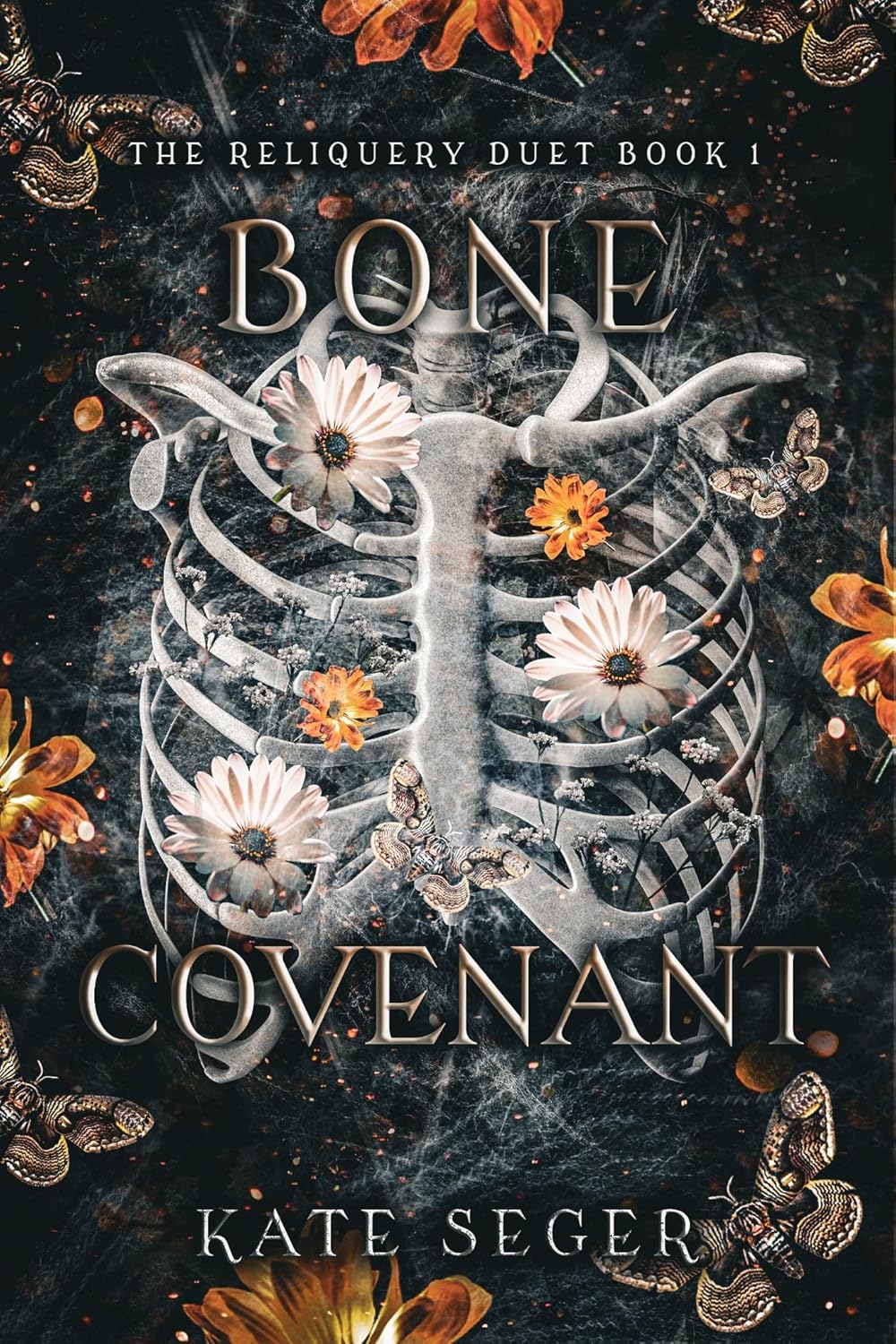
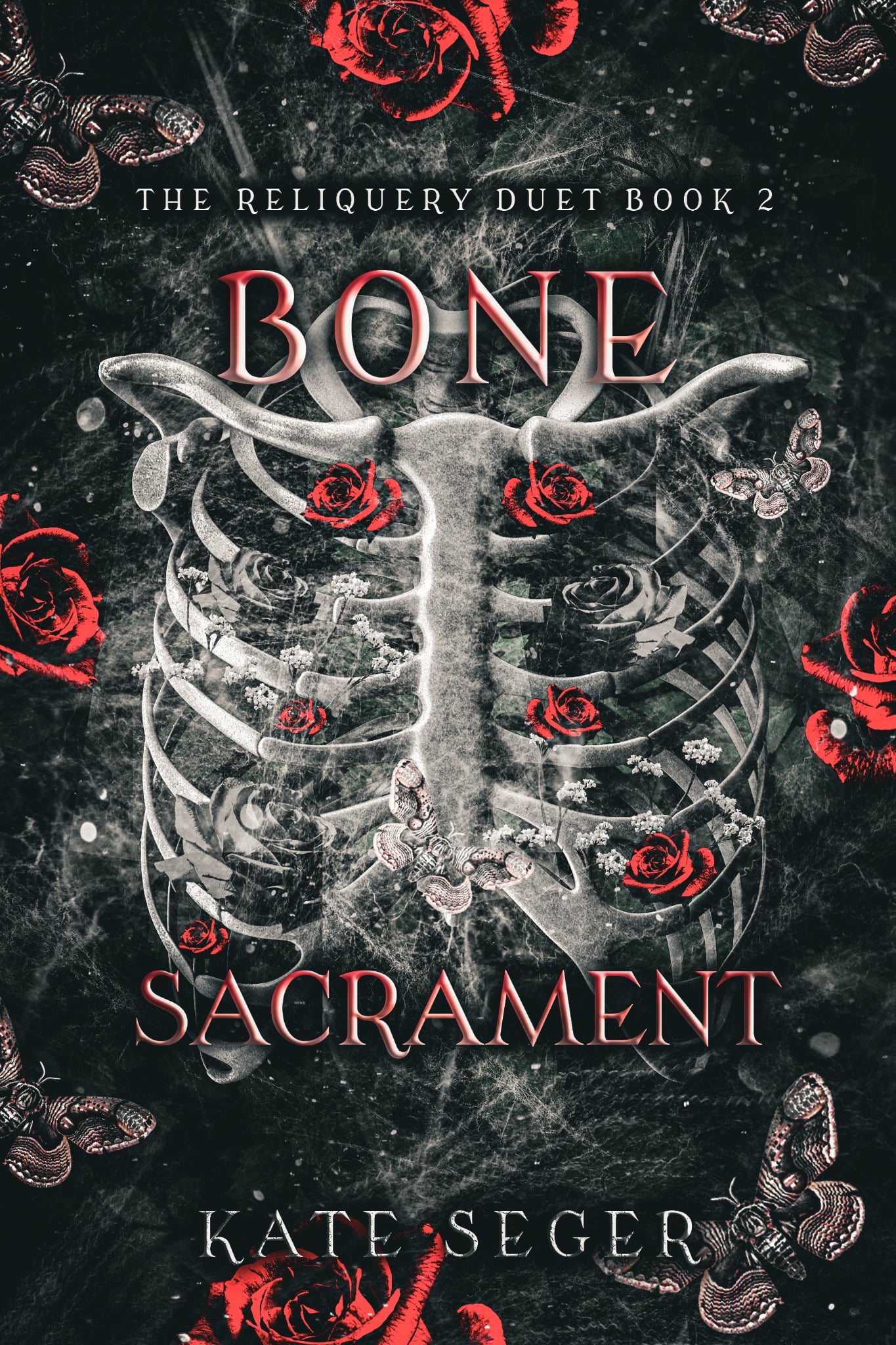
The Reliquary Duet
England, 1348. The Black Death has emptied Ashenmere of carts and pigs and children. Else inherits her mother’s cottage, her cracked mortar, and a covenant she did not choose. The world she moves through was real. This is what stood behind it.
The Great Mortality
The year the plague came to England.In June of 1348, a ship put in at the little Dorset port of Melcombe, and something came ashore with it that the chroniclers had no name for yet. They would not call it the Black Death for centuries. At the time they called it the Great Mortality, the Great Pestilence, or simply the death — and within eighteen months it had killed somewhere between a third and a half of everyone in England.
It moved faster than news could. It came in two forms: one that swelled the lymph nodes into black buboes at the groin and the armpit, and one that filled the lungs and passed from breath to breath, killing in a day. There was no understanding of contagion as we mean it — the learned blamed corrupted air, a bad conjunction of the planets, the sins of a fallen people. The remedies were prayer, flight, and fire.
The villages took it worst. A place like Ashenmere would have lost its priest and its reeve and its children in a single autumn, the survivors burying the dead in pits when there was no one left to dig single graves and no ground left consecrated fast enough. Fields went unharvested. Animals wandered untended. The silence in a plague village was the loudest thing in it.
The living were scarcely enough to bury the dead.
You have almost certainly been told that a nursery rhyme remembers all of this. Ring around the rosie, a pocket full of posies — ashes, ashes, we all fall down. The rosy ring of the rash, the herbs carried against corrupted air, the ashes of the burned, the falling-down of the dead. It is a wonderful, terrible story — and it is almost certainly not true. The rhyme does not appear in print until the 1880s, more than five centuries too late; its earliest versions carry no plague at all (in many of them the children simply fall down and get back up); and folklorists treat the plague reading as a twentieth-century invention. We seem to need our catastrophes to leave something singable behind. The Great Mortality did not rhyme. It only emptied the houses.
Into that silence, in the books, walks Else — inheriting not just a cottage but the work that keeps a village standing when everything that was supposed to protect it has died or fled.
The Women Who Kept the Work
Healers no one wrote down.The physicians of 1348 were few, expensive, university-trained, and mostly in the cities. For the great majority of the English — and for nearly all of the rural poor — medicine meant a woman. The herbwife, the midwife, the cunning-woman: the one who knew which plants drew a fever and which closed a wound, who set bones and birthed children and sat with the dying.
Her knowledge was real and it was oral. It passed mother to daughter, neighbor to neighbor, kept in the hands and the memory rather than in Latin on vellum, which is precisely why so little of it survives in the record. The men who wrote the histories did not think to write her down. She appears, when she appears at all, in a court roll or a churchwarden’s complaint — named only when something went wrong.
The mortar and pestle on Else’s table is not a prop. It is the single most important tool such a woman owned: the means of grinding dried herb and root and bark into the simples that were the whole of the medicine most people would ever receive. A cracked one, kept and used anyway, is the kind of inheritance that actually got handed down.
Kept by women no one put in the record.
Sealed in Bone
Relics, reliquaries, and the holiness of the dead.To a medieval Christian, the bones of a saint were not a memorial. They were power — the holy made present in matter, a piece of heaven left on earth. A martyr’s finger or skull could heal the sick, turn aside a storm, anchor an oath. Whole towns were built around a relic; pilgrims walked for weeks to touch one through a grille.
A reliquary was the vessel made to hold such a thing: gold and crystal and enamel, shaped sometimes like the very limb it contained, so that the bone could be seen and venerated without being touched. The cult of relics ran underneath the whole medieval church. The altar of every consecrated church held a saint’s bone sealed inside the stone — the building itself a reliquary, the holy literally founded on the dead.
That is the soil the duet grows in. Sealed in bone, renewed in blood is not a metaphor invented from nothing. It is what a medieval village already half-believed: that the dead keep the living, that holiness lives in bone, and that some covenants are paid for in the body.
A Foundation Older Than Rome
What the church was built on.The stone church above a village like Ashenmere would have felt eternal to the people beneath it — but it was, very often, the newest holy thing on the hill. England’s churches were built and rebuilt on ground that had been sacred long before the parish: on Roman temple floors, on the wells and groves and standing stones of the people who came before, on places that had been receiving offerings since before anyone could say to whom.
The Church knew this and used it. A famous letter from Pope Gregory the Great instructed his missionaries not to tear down the old shrines but to consecrate them — to lay the new faith directly over the old, stone on older stone. Which means that under a great many English churches there is, quite literally, an older foundation, and an older arrangement, that the building was raised to cover.
The chapel above the village is not the only one with a foundation older than Rome.
What Is the Covenant?
It is not a spell. It is not a gift. It is a bargain made before the church was built and kept by the women who came after, whether or not anyone told them what they were keeping.
The bone women of Ashenmere do not appear in the parish record. But the village stands because they kept the work, generation after generation, without thanks and without rest.
- SEALED IN BONE.
- RENEWED IN BLOOD.
- KEPT BY WOMEN NO ONE NAMED.